Grow Bags vs Raised Beds: Why Grow Bags Win in Florida Heat
If you are researching how to start a garden in Florida, you have probably seen two popular options: raised beds and fabric grow bags. Both work. But for Florida gardeners who want the least amount of ongoing effort, one is clearly better than the other.
We have tested both in North Port, FL (Zone 10a) through multiple growing seasons. Here is what we learned — and why we switched entirely to grow bags.
This article contains affiliate links. If you buy through our links, we may earn a small commission at no extra cost to you.
Quick Comparison: Grow Bags vs Raised Beds
| Factor | Grow Bags | Raised Beds |
|---|---|---|
| Startup cost | ~$2/bag | $50–$200+ (lumber + hardware) |
| Soil cost | ~$7–8 per bag | $100–$300 to fill |
| Soil temp in summer | 10–20°F cooler than plastic | Can overheat, especially metal |
| Drainage | Excellent — water escapes through fabric | Depends on construction; can flood |
| Portability | Move anywhere — handles included | Permanent once built |
| Maintenance | Replace bags every 2–3 seasons (~$2) | Lumber rots in 3–5 years in FL humidity |
| Hurricane prep | Drag to cover in 5 minutes | Hope for the best |
| Space needed | Patio, balcony, driveway — anywhere | Needs dedicated ground space |
| Root health | Air pruning prevents root-binding | Standard root growth (can circle) |
| Lazy score | Set up once, garden for years | Build, maintain, repair, rebuild |
Cost: Grow Bags Win Before You Plant a Single Seed
This is the comparison that ends most debates.
Grow bag startup cost:
- 10 grow bags (10-gallon): ~$18 ($1.80/bag)
- Soil to fill 10 bags: ~$70 (about $7/bag)
- Total: ~$88 for 10 planting stations
Raised bed startup cost:
- One 4×8 cedar raised bed kit: $80–$200
- Soil to fill it (32 cubic feet): $100–$200
- Hardware, liner, screws: $20–$40
- Total: $200–$440 for one bed
One raised bed gives you roughly the same planting area as 8–10 grow bags. The grow bags cost less than half. And if a bag wears out after 2–3 Florida seasons, you replace it for $2 — not $200.
Need the full budget breakdown? See our first Florida garden under $100 guide.
Heat Management: The Real Florida Dealbreaker
Florida summer soil temperature is the #1 killer of container gardens. Here is where grow bags have a physics advantage that raised beds cannot match.
Fabric grow bags breathe. Air passes through the walls, creating evaporative cooling — the same principle as sweat cooling your skin. In our testing, fabric grow bags run 10–20°F cooler than plastic pots in direct Florida sun. Roots start dying at 95°F. That temperature margin is the difference between productive plants and stressed, wilting ones.
Raised beds trap heat. Wood absorbs and retains heat. Metal raised beds are worse — galvanized steel in July Florida sun can push soil temps well past the danger zone. Even cedar, the best wood option, does not breathe the way fabric does.
The air pruning bonus. When roots in a grow bag hit the fabric wall, they are exposed to air and stop growing outward. The plant responds by sending out new lateral roots. More roots = more nutrient absorption = healthier, more productive plants. This is called air pruning, and it is the reason commercial nurseries use fabric pots. Raised beds do not offer this — roots hit a solid wall and start circling, eventually becoming root-bound.
Want to learn more about how this works? Our grow bag gardening guide covers air pruning in detail.
Drainage: Florida Rain Is No Joke
Florida gets 50+ inches of rain per year. Summer storms can dump 5 inches in a single afternoon. Your garden containers need to handle that.
Grow bags drain through every surface. The entire bag is permeable. Excess water escapes through the bottom, sides, and even upward through evaporation. Root rot is nearly impossible in a fabric grow bag because water simply cannot pool.
Raised beds depend on construction quality. A well-built raised bed with proper drainage holes and loose soil drains fine. But many raised beds — especially cheaper kits — sit on compacted ground or have inadequate drainage. In Florida's clay-heavy or sandy soils, water can pool at the bottom of a raised bed after a heavy rain, creating exactly the root rot conditions you were trying to avoid.
Portability: Move Your Garden in 5 Minutes
This is the advantage that Florida gardeners do not think about until they need it.
Hurricane season (June–November): When a storm is approaching, you can grab your grow bags by the handles and move them under cover, into a garage, or against a protected wall. Try doing that with a 4×8 raised bed full of wet soil.
Chasing sunlight: Florida sun shifts dramatically by season. A spot that gets perfect morning sun in March might be scorching by June. Grow bags let you adjust. Raised beds stay where you built them.
Apartment and condo friendly: No yard? No problem. Grow bags work on balconies, patios, driveways, and even rooftops. Raised beds generally require dedicated ground space.
Maintenance: The Lazy Gardening Test
Our whole philosophy is: set it up once, then spend your time harvesting, not maintaining.
Grow bag maintenance:
- Replace bags every 2–3 seasons (~$2 each)
- That is it. There is nothing else to maintain.
Raised bed maintenance:
- Untreated wood rots in 3–5 years in Florida humidity
- Cedar lasts longer (5–8 years) but still degrades
- Metal beds can rust at joints
- Lumber warping requires re-leveling
- Wood attracts termites — a real Florida concern
- Liner replacement every few years
When your raised bed finally fails, you are looking at a rebuild that costs $100+ and takes a full afternoon. When a grow bag wears out, you dump the soil into a new $2 bag and keep planting.
When Raised Beds Might Be Better
We are not saying raised beds are bad. They make sense in some situations:
- Permanent in-ground gardens where you want a defined, decorative structure
- Very tall beds (24"+) for gardeners with mobility issues who need to avoid bending
- Northern climates where soil warming in spring is an advantage (not relevant in Florida)
- Large-scale row cropping where you need continuous planting rows
If any of these describe you, raised beds are worth the investment. But for most Florida gardeners who want to grow food with minimal effort on a patio or in a small yard, grow bags do the same job at a fraction of the cost and maintenance.
Our Recommended Grow Bag Setup
Ready to skip the raised bed headache? Here is the setup we recommend for a lazy Florida garden:
Best All-Around: vinmoso 10-Gallon Grow Bags 10-Pack
vinmoso 10-Gallon Grow Bags 10-Pack
The default starter pack. Thick non-woven fabric, reinforced handles, and excellent drainage. These 10-gallon bags handle tomatoes, peppers, cucumbers, and every other fruiting vegetable we grow in Florida. A 10-pack at ~$1.80 per bag is cheaper than a single raised bed kit.
Check price on Amazon (paid link)Best for: First-time Florida gardeners who want to start growing immediately without building anything. Pair with our soil setup guide and a solar water timer for a true set-it-and-forget-it garden.
Budget Starter: vinmoso 5-Gallon Grow Bags 10-Pack
vinmoso 10-Pack 5 Gallon Grow Bags
Same thick non-woven fabric and reinforced handles as the 10-gallon version, in a smaller size. Five-gallon bags are ideal for herbs, lettuce, small peppers, and compact greens. Ten bags at ~$1.40 each — the cheapest way to test grow bag gardening before scaling up.
Check price on Amazon (paid link)Best for: Budget-conscious gardeners, herb gardens, or anyone who wants to test grow bags before committing to a bigger setup. See our grow bag size guide for which plants fit 5-gallon vs 10-gallon. Great for growing the easiest vegetables for Florida grow bags.
Frequently Asked Questions
Are grow bags better than raised beds for Florida? For most Florida gardeners, yes. Grow bags cost less, drain better, stay cooler in summer heat, and require almost no maintenance. The breathable fabric provides air pruning benefits that raised beds cannot match. The only scenario where raised beds clearly win is if you need a permanent, decorative garden structure or very tall beds for accessibility.
How long do grow bags last in Florida? Quality fabric grow bags (300GSM+) last 2–3 seasons in full Florida sun. Thinner bags may last only 1–2 seasons. Either way, replacement cost is $1–2 per bag. A cedar raised bed lasts 5–8 years but costs $100+ to replace. Over 10 years, grow bags are significantly cheaper.
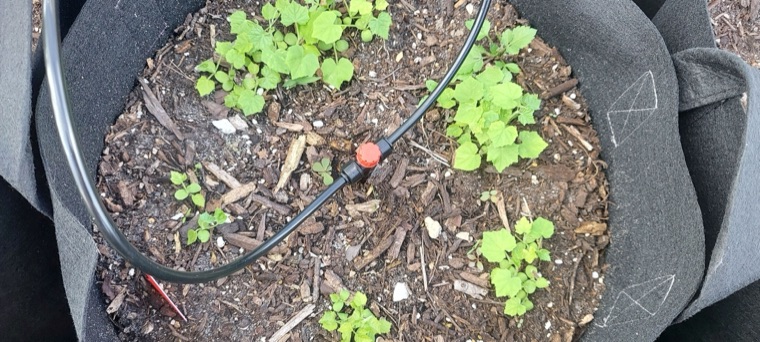
Do grow bags dry out too fast in Florida heat? They can, which is why we pair them with drip irrigation and a solar water timer. A simple drip system on a timer waters your bags automatically — no daily hand-watering required. Problem solved, the lazy way.
Can I grow tomatoes in grow bags in Florida? Absolutely. We grow Everglades tomatoes and other varieties in 10-gallon fabric bags. The air pruning effect actually produces stronger root systems than raised beds or in-ground planting. Pair with a good soil mix for best results.
What about pests — are grow bags better or worse than raised beds? Grow bags are slightly better for pest prevention because they are elevated off the ground (reducing slug and snail access) and portable (you can move plants away from infestations). See our full pest prevention guide for the lazy approach to keeping Florida garden pests under control.
Can I put grow bags on concrete? Yes, and many Florida gardeners do. Concrete patios, driveways, and pool decks are all fair game. The bags drain through the fabric, so water does not pool. Tip: elevate bags 1–2 inches on pot feet or a wire rack to improve airflow underneath and prevent heat transfer from hot concrete.
The Bottom Line
Raised beds are fine. But for Florida gardeners who want to grow food without a construction project, without ongoing lumber maintenance, and without spending $200+ before planting a single seed — grow bags are the lazier, cheaper, cooler choice.
Start with a 10-pack of grow bags, add good soil, plug in a drip irrigation kit with a solar timer, and you have a garden that waters itself and costs under $100.
That is lazy gardening. That is the point.
Related Guides
- Best Grow Bags for Florida Heat (2026) — Our full grow bag buyer's guide
- The Lazy Gardener's Guide to Grow Bag Gardening — Everything you need to know about grow bag gardening
- Your First Florida Garden Under $100 — Complete budget setup guide
- Best Drip Irrigation Kits for Grow Bags — Automate your watering
- Grow Bag Pest Prevention — The Lazy Way — Keep pests out without constant spraying