Why Everglades Tomato Is the Only Tomato Worth Growing in Florida (Zone 10a)
You planted tomatoes. You watered them. They grew — leaves, stems, flowers, the whole thing. And then nothing. Flowers dropped. No fruit. Summer passed. You pulled the plants thinking you did something wrong.
You didn't. The tomatoes did exactly what tomatoes do in Florida: they failed.
Standard tomatoes — Better Boy, Roma, Celebrity, beefsteaks of any kind — cannot set fruit in Florida Zone 10a for roughly six months of the year. This isn't a soil problem or a watering problem. It's biology. And most tomato guides written for Ohio or Virginia will never mention it.
There is one exception: the Everglades tomato. It's the only variety that fruits year-round in Zone 10a, including summer. This is why. More Florida gardening tips in our beginner guide.
The Florida Tomato Problem
Florida's summers are not just hot. They're night-hot.
Most vegetables can handle high daytime temperatures as long as the nights cool down. Tomatoes need night temperatures below 75°F to set fruit. In Zone 10a (South Florida — Sarasota, Fort Myers, Naples, Miami), average nighttime lows stay above 75°F from roughly May through October. That's a six-month window where no standard tomato will produce fruit.
The mechanism is specific: pollen becomes sticky and sterile above 90°F daytime / 75°F nighttime. The flowers open. Pollinators visit. But the pollen doesn't transfer correctly, and the flower drops without being fertilized. The plant is alive and healthy. It just can't reproduce under those conditions.
This process — pollination succeeding and a flower becoming fruit — is called fruit set. When fruit set fails, you get flowers and nothing else.
Your tomato plants weren't sick. They were stuck.
Why Standard Varieties All Fail the Same Way
The frustrating part is that most "heat-tolerant" tomato advice doesn't account for Zone 10a specifically.
Here's the honest breakdown:
Better Boy, Celebrity, Big Boy, Brandywine — large beefsteak types. Fruit set requires nights below 70°F. Usable window in Zone 10a: maybe November through March, and only if you plant in September/October. Miss that window and you're growing leaves all year.
Roma, San Marzano, paste tomatoes — slightly more tolerant, but still fail above 75°F nights. Same window. Same problem.
Beefsteaks generally — marketed heavily in garden centers. Won't fruit in Florida summer under any circumstances. You'll see them for sale at Lowe's in May. Don't buy them in May.
Cherry tomatoes (Sweet 100, Sun Gold, Yellow Pear) — more heat-tolerant than large varieties. Will produce October through June with established roots. Still pause in summer when nights exceed 75°F. Useful for Florida fall/winter gardens, not year-round.
The pattern: every standard tomato has a hard stop in Florida summer. The fruit set mechanism shuts down. The plant sits, grows, and waits — if it survives.
What Makes the Everglades Tomato Different
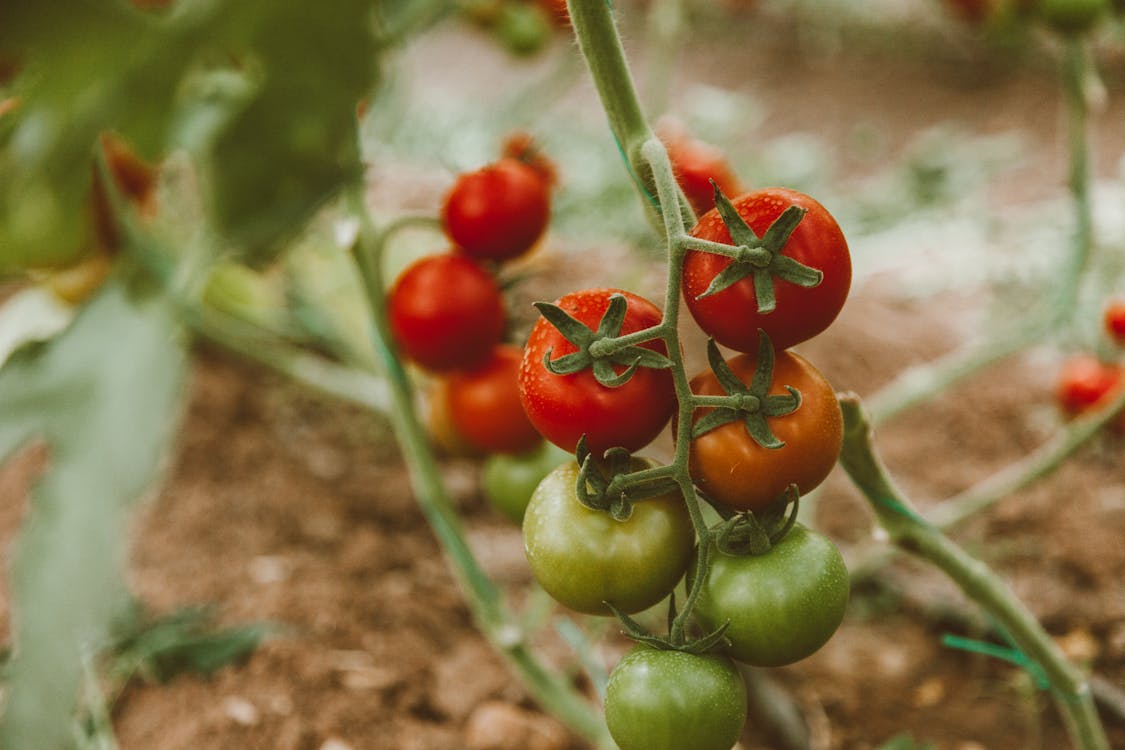
The Everglades tomato (Solanum pimpinellifolium subspecies) is not a cultivated hybrid developed for garden centers. It's a small wild tomato native to Florida's subtropical climate. It evolved here. It doesn't need the same conditions standard tomatoes require.
It fruits year-round in Zone 10a — including summer. Night temperatures of 78–82°F don't stop it. This is not a claim from a seed catalog. It's what happens in actual Zone 10a gardens.
It's a cherry tomato — small, grape-sized, intensely flavored. Sweeter and more acidic than grocery store cherry tomatoes. Good fresh, good cooked down into sauce.
It self-seeds. When fruit drops and conditions are right, seeds germinate on their own. In an established planting, parent plants that age out are replaced automatically by seedlings that appear in the surrounding soil. You don't replant — you manage what appears.
Once established, it doesn't need replanting. Get one plant going in the right spot, let it fruit and drop seeds, and you may never need to start from scratch again. This is as close to a "plant it once" tomato as exists.
No other variety does this in Zone 10a.
The Black Cherry Nuance
Black Cherry tomatoes are worth mentioning separately, because they're more heat-tolerant than standard cherry tomatoes and genuinely useful in a Florida garden — but they're not year-round.
Black Cherry will:
- Produce well from October through June
- Pause in peak summer (not die — just stop setting fruit)
- Bounce back hard in fall with established roots
The advantage of starting Black Cherry early (even in March) is that the root system established over spring and summer makes the fall crop significantly more productive. You're planting for October, not May.
So: if you want the largest tomatoes you can grow in a Florida container, Black Cherry is worth a bag. But don't expect summer tomatoes from it. That's Everglades territory.
Growing Everglades Tomatoes in Zone 10a
Container vs. In-Ground
Both work. In-ground plants with full sun access can grow into large, sprawling bushes over time. In a 10-gallon grow bag, you'll get a productive but more manageable plant. Not sure what size bag to use? Our grow bag size guide breaks it down by plant type.
If you're using grow bags, 10 gallons is the minimum for a tomato you want to fruit heavily. Black fabric bags work fine — they absorb heat, which isn't a problem for a heat-adapted plant like Everglades. For a full comparison of the best options, see our best grow bags for Florida heat guide.
The bags we use:
vinmoso 10-Gallon Grow Bags 10-Pack
A 10-pack at ~$1.80 per bag — enough for multiple Everglades tomato plants with room to expand. Look for bags with handles — you'll want to move them when rearranging the garden.
Check price on Amazon (paid link)Getting Seeds
Everglades tomato seeds aren't available at most local garden centers — they stock Better Boy and Early Girl because that's what gets marketed nationally. You need to order online.
Search for "Everglades tomato seeds" on Amazon — look for open-pollinated, non-GMO listings with strong germination reviews. If you're ordering, consider grabbing Black Cherry seeds at the same time for a fall planting.
When to Plant
Because the Everglades tomato fruits year-round, there's no perfect or wrong time to start one. That said:
- October–February is ideal for starting from seed in Zone 10a — cool nights, good germination conditions
- March–April is fine; you'll see fruit before the real summer heat
- May–August — you can plant, but seedling establishment is harder in the heat; direct sun + heat + dry bags is stressful for small plants. Possible, not ideal.
For exact timing on tomatoes and other crops, check our seasonal gardening playbook.
Setup Notes
- Full sun — 8+ hours. Don't put it behind a fence or under shade cloth. It wants sun.
- Consistent watering — fabric grow bags lose moisture through the sides 2–3x faster than plastic pots. In summer, daily watering is the floor. If the soil is dry 2 inches down, water.
- Straw mulch on top of the soil in the bag cuts evaporation by 40–50%. Worth doing.
- Let it sprawl or cage it — the plant will grow sideways and get bushy. A tomato cage or simple stake helps if space is limited.
K-Brands Tomato Cages 6-Pack
Sturdy support cages that fit 10-gallon grow bags. Keeps Everglades tomato plants upright and manageable when they start sprawling.
Check price on Amazon (paid link)- Don't pull it in summer — if it slows down or stops fruiting temporarily during the absolute peak of August heat, leave it. It will resume. Pulling an established Everglades tomato plant is throwing away next season's garden.
What to Expect
A well-established Everglades tomato in Zone 10a produces small clusters of cherry tomatoes continuously. Not in huge flushes like a beefsteak, but steadily — a handful at a time, week after week. For cooking, you accumulate them in the refrigerator over a few days and use them for sauce. For fresh eating, you pick and eat as you go.
When the plant ages, look near the base for seedlings. Those are the next generation, germinating from dropped fruit. Thin them if needed, keep one or two in the best position, and you've got a self-renewing planting.
That's the lazy gardener version of tomatoes in Zone 10a.
Why This Matters More Broadly
Florida garden centers sell you the same tomatoes they sell to everyone in North America. Better Boy seeds in May. Celebrity seedlings in June. Plants that will never fruit in your climate.
This isn't malicious — it's a distribution model optimized for a national market. The information about which plants actually work in Zone 10a exists, but you have to look for it. It's not on the tag at the garden center.
The pattern shows up everywhere: lavender (rots in Florida humidity), standard basil (dies from downy mildew), cilantro (bolts in days), bell peppers (blossom drop in heat). The national garden advice layer doesn't map onto Zone 10a.
Everglades tomato is the example that lands hardest because people want tomatoes. Growing anything in a container garden feels like a failure if the tomato plant never produces. It's usually not the gardener's fault. It's the variety.
Frequently Asked Questions
What is an Everglades tomato?
Everglades tomato (Solanum pimpinellifolium) is a wild-type cherry tomato native to South America that thrives in Florida's heat and humidity. Unlike standard tomatoes, it fruits year-round in Zone 10a, self-seeds, and requires minimal maintenance.
Why do regular tomatoes fail in Florida?
Standard tomato pollen becomes sterile above 90°F daytime or 75°F nighttime temperatures. In Zone 10a, those conditions persist for most of the year, so standard varieties flower but never set fruit. Everglades tomato is adapted to produce in extreme heat.
When should I plant Everglades tomato in Florida?
October through February is ideal for starting from seed in Zone 10a. March through April also works. You can plant in summer, but seedling establishment is harder in the heat. Since it fruits year-round, there's no wrong time — just easier and harder windows.
How big do Everglades tomato plants get?
Everglades tomatoes are indeterminate and can grow into large sprawling bushes, especially in-ground with full sun. In a 10-gallon grow bag, they stay more manageable. Use a tomato cage or stake to keep them upright if space is limited.
Do Everglades tomatoes self-seed?
Yes. Dropped fruit germinates near the base of the parent plant. You can thin the seedlings, keep one or two in the best position, and have a self-renewing planting without buying new seeds or transplants.
Related Guides
- Florida Plants That Fail — and What to Grow Instead — the full failure list with Florida-proof replacements
- Florida Planting Calendar: What to Grow Month by Month — exact timing for every crop in Zone 9b-10a
- How to Start a Garden in Florida for Beginners — the complete step-by-step for new Florida gardeners